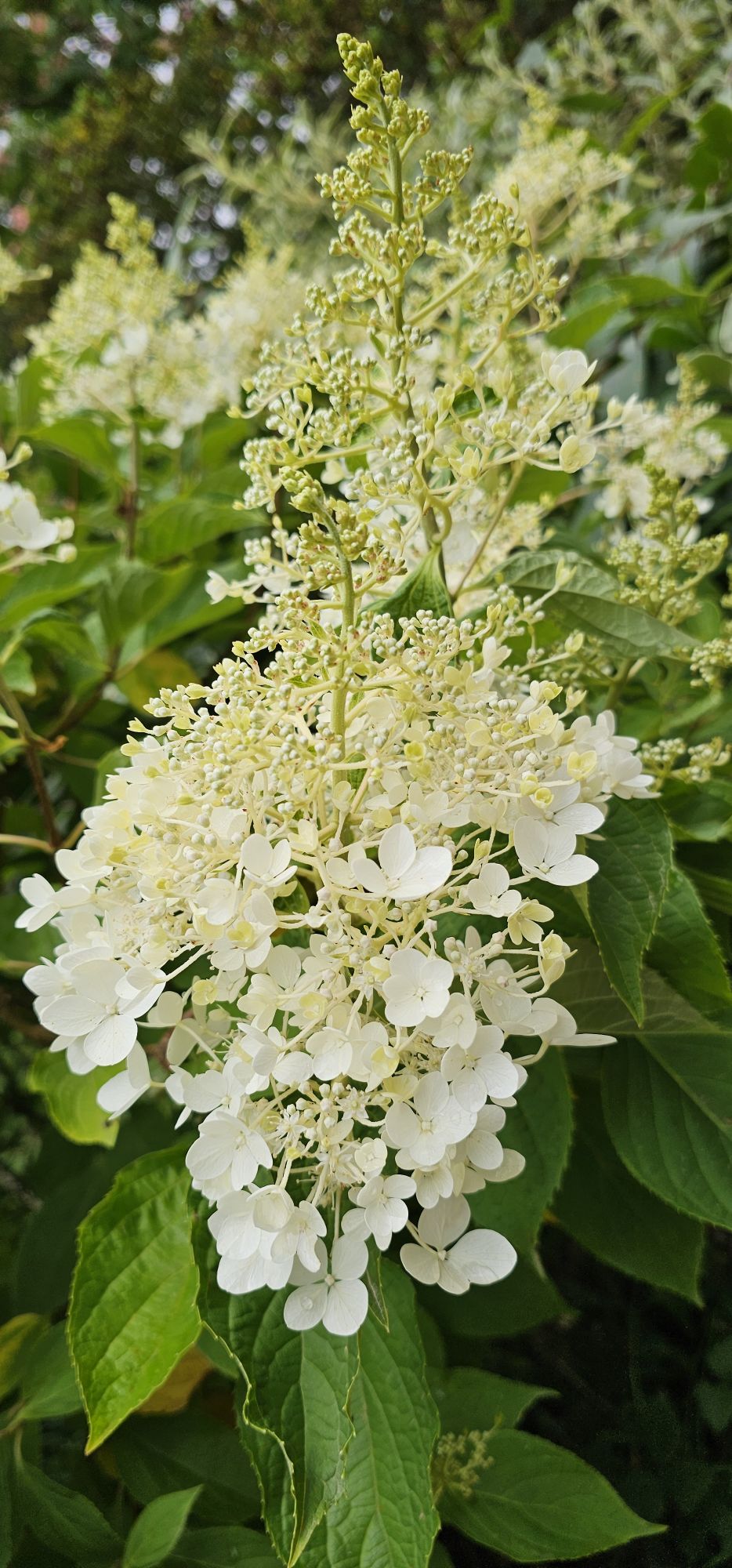
The fifth wave of grief came on a Friday morning, on John’s way to work, with the smell of jasmine sifting through the neighbor’s hedge. That was the day Salha arrived.
The flowers must have been growing on the other side of the hedge, invisible from the sidewalk. Scent transcended the thick greenery and caught him up in their spell. He stopped walking. He leaned into the hedge and parted the leaves, looking for them, while people stepped around him and stared. He didn’t mind the staring any more. Grief had made him a man who put his hands into other people’s hedges. Then the smell came again, sweeter, stronger, and he recognised it. He had thought by now he knew all the ways the sadness came. In place of sensory pleasure, his insides split with the knowing that his memories had found a new way to torment him. This feeling had been there for a while, waiting for him to notice it so it could grip him a little harder. He wanted it to stop, he wished so hard that it would stop. Every time he’d thought the pain was starting to wane it would come back, angrier. For the first time in months, John missed his bus.
At dusk, after work, he took a different bus and walked the long way round, on a path with no hedges. Salha was sitting on the bench in the street in front of his building where she’d told him she’d be waiting, with her bag on the ground next to her feet.
That night, after dinner, John went around the living room swithing off lights and lamps one at a time, doing a parody of a dance they had both learnt as children. A dip, a turn, a lift of each foot until only the dim floor lamp at the corner was left on. Then John and Salha lay down on the carpet in the darkness. They’d slipped back into old rituals effortlessly, back to the places they used to go to when they were children. It was how they talked best: nearly in the dark without faces and their silent noisiness. At nineteen, taking turns in their dorm rooms, they’d spent whole nights like this curating the perfect ambience for hearty conversation and debating whether there was such a thing as micro-expressions being too loud, or whether being able to look into people’s eyes while they spoke was helpful or frightening. This scene on the floor felt like going back to innocence, to the time before they’d known pain.
More than a year had passed since they’d last seen each other, neither of them had said why, and it felt odd to spend time together again, like there was something that was once familiar but was now unknowable. He, perked up by the strangeness of coming back from work to find his solitude invaded, but not minding at all. She, puzzled by his attentiveness all evening. He had cooked, remembered that she hated coriander and brought her a cushion before she asked. She wondered when he had learned to care for people with an affection she associated with mothers unlike hers; mothers who knew how to love tenderly, not the ones with razor blades stuck in their hearts by traumas nobody taught them to name, so you got cut whenever they held you close.
The large window in the corner was open and from the floor they could see the moon hanging out with a handful of stars. John raised his head from the floor every few minutes to sip from a glass of his second-favorite Riesling poured from a bottle he’d opened days before. Salha’s glass, the same as his, stood on the edge of the coffee near her feet holding the last of the Kombucha she’d brought, and that hadn’t been in the fridge long enough to get cold. She imagined accidentally knocking the glass over and strewing shards and smelly odd-coloured stains on his carpet. It wouldn’t be the first time that things shattered while they watched.
“I got my second pay raise in six months today.”
John rarely talked about the job he barely liked but was very good at.
“Well,” Salha said. “Much better than unpaid leave!”
She had spent the last two months travelling, getting lost on purpose, filling her days with walks in prety parks and afternoon visits to bookstores and tiny independent galleries you had to ring a bell to enter. She’d allowed herself not to think about the end of this trip when she’d have to go back to their home country and face the decision to move her mother, who had started falling and forgetting, into the tiny extra bedroom room in the flat Salha had only recently bought. She would need to have a rail installed for her mother to hold on to, and level out the little step that led into the guest bathroom.
John pictured her in a gallery somewhere, in a summer dress, standing too close to a painting the way she always did, and for no reason he could name, he smelled jasmine again.
Through the window, the moon was now peeking between two clouds, laying a line of light along the rim of her glass, teasing them. When they were children, a moon like that had meant going outside to play in its light. The last time their old friend group had all been together, at the weddding, then the drive home, nobody had looked up at the sky.
All evening John had been wondering how to take them both back there. He did not want to be the only one who still went.
“Do you still think about that night?”
He was afraid of what she might say and what the words might do to him, but he had to ask.
She moved without answering him, so he turned from the window and the moon to look at her and she was already getting up. She knelt behind his head and pushed him up by the shoulder until he was sitting. Then she held him close.
They stayed like that for a long time. He, eyes closed, feeling her wrapped around his back, her arms trapping his own. She, cheek against his back, her tears streaming silently where he couldn’t see.
Outside, the moon went in.
Of course, she still thought about that night. The four of them in the car, driving back into the city from an old school friend’s wedding. John was driving, and Pat, still his wife then, sat in the passenger seat next to him, fifteen weeks pregnant, thrilled to be feeling good, finally, after a horrid first trimester. Salha sat in the back with John’s brother Jack in the back.
At the wedding reception, John had told Salha that he and Pat had been tearing at each other for months before the pregnancy and that the baby was going to save them. She wasn’t sure whether he meant their marriage or their lives, but for all the years she had know him, John had wanted nothing more than to be a father. It made her wonder if her own mother had ever wanted to be a mother.
Then, somewhere in the jumble and lull of talk and old songs playing on the car’s stereo, Pat giggled, laid a hand on her belly bulging above the seatbelt and said What if it’s Jack’s?
Salha turned to Jack but could not see his face in the darkness. John braked and swerved hard. The car left the road and bumped violently for many long seconds before it banged hard on something and stopped. The headlights had gone off, and the moon was away that night, so it was really dark and for a moment, really quiet.
Then there was a frightful, desperate sound tearing through the silence, a sound Salha had never heard a person make and it was Pat.
Nobody remembers much of the next few minutes. Which car doors flew open first? Whose phone’s torchlight was being held over Pat? All they knew was that once they could see, there was blood all over Pat’s dress, all over the passenger seat beneath her, and more of it every second.
John and Pat had only found out days before that the baby was a girl and named her Ivy. Pat hadn’t stopped bringing flowers into their home from the day she had become pregnant, even before she knew that she was. Ceramic mugs and glass jars filled with baby’s breath and jasmine were on every window sill, every side table every surface of their home like she was trying to mask the stink of their dead love with the symbols of budding life.
They could not have known that help would not arrive until Pat was unconscious and Ivy was gone.
Now, as John sat on his floor and Salha held him, he saw little jasmine petals clutched between tiny baby fingers, baby scents intermingling with floral scents, haunting everything. This way of seeing Ivy was new, unlike all the other nightmares he’d had relentlessly for the past year. It cracked him open, and his sobs shook through the arms that held him, and Salha held on. His grief held him too, but he was no longer alone.
© 2026 Wambui Wairua. All rights reserved.

